
A beautifully applied set can look tired after two weeks if it isn’t looked after at home, and an ordinary set can last far longer with a good routine. This guide brings together the eyelash extension aftercare advice given by ophthalmologists, optometrists and medically reviewed health guides: what to do in the first few hours, how to wash your lashes, which products to avoid, how to sleep, how often to book infills and when to see a doctor. It’s written for clients, and lash artists are welcome to print it or send it on after each appointment.
How long extensions last (and why aftercare matters)
Extensions are bonded to your natural lashes, so each one falls out when the lash holding it sheds. The American Academy of Ophthalmology (AAO) says they typically last three to four weeks, falling off as your natural lashes shed. The Canadian Association of Optometrists says one to two months, while Healthline, in a medically reviewed article, says 3–4 weeks is usual but that good care can stretch this to 6–8 weeks.
So the figures vary. You can’t change your natural lash cycle, but you can control friction, oil and dirt, which weaken the bond or damage the natural lash. That’s what your routine is for.
The first few hours: keep them dry
Lash adhesive needs time to cure fully, and the advice differs depending on the source:
- EyeWiki (AAO) advises not washing your face for the first few hours, noting that the glue can take up to six hours to set completely.
- Healthline recommends not getting the extensions wet, showering face-first or washing your eyes for the first 48 hours.
In short, keep them away from water for anything from a few hours to 48 hours depending on the source. The sensible approach is to follow your lash artist’s instructions, since it depends on the adhesive they used. During that time, avoid rubbing your eyes or touching your lashes.
Everyday eyelash extension aftercare
1. Wash them: skipping cleansing is the most common mistake
Plenty of people stop washing their eyes for fear of losing their extensions, and that has consequences. A clinical study published in 2024 in the Journal of Clinical Medicine notes that extensions often lead to neglected lid hygiene. The authors saw debris and cosmetic residue at the lash roots and, in many participants, a significant Demodex mite infestation. In Optometry Times, an optometrist describes a patient with itchy, red, watery eyes who had stopped washing her lashes because she was worried about ruining her extensions.
How often should you wash them? Again, there’s no single answer. Healthline suggests cleaning them roughly every three days with a dedicated extension cleanser, while optometrist Dr Tanya Gill’s guide recommends washing the lids every night with a foaming cleanser. If you wear make-up or spend your day around dust or sweat, a daily cleanse makes most sense.
Step by step:
- Wash your hands.
- Use an oil-free cleanser made for extensions, such as a foaming lash shampoo (you’ll find lash shampoos in our glue & liquids range).
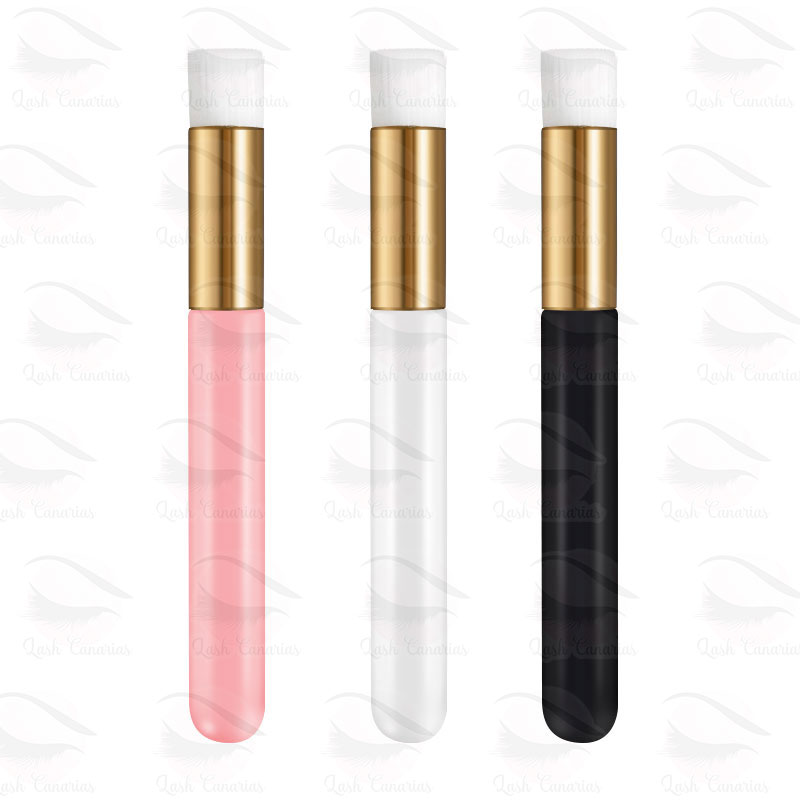
- With your eye closed, apply a small amount with a soft cleansing brush. Work it along the lash line and lid margin, where debris builds up, always following the direction of the lashes.
- Keep the product out of your eye. Rinse with lukewarm water until no foam is left.
- Pat dry with a clean towel; don’t rub. Once dry, brush them through.
Skip cotton buds and oily make-up wipes: they snag on the extensions and pull at them.
2. Brush them every morning
Healthline recommends brushing the tips every morning with a clean, dry spoolie. It keeps the extensions separated and in place after a night’s sleep. Disposable spoolies are handy; if you reuse one, keep it in a protective tube so it stays clean. Both are in our accessories section. Brush gently and never tug from the root.
3. Products to avoid
- Oils near the eyes: Healthline advises against any oil-based products near extensions, especially eye creams and make-up removers. Check the ingredients list.
- Waterproof make-up: it usually needs an oil-based remover, which can loosen the bond. Choose water-based make-up instead.
- Mascara: both Healthline and Dr Gill’s guide advise against wearing it with extensions, even formulas marketed as extension-safe.
- Eyelash curlers: they can damage the extensions or pull them out.
4. How to sleep
Sleeping on your front or side crushes the extensions against the pillow. Healthline recommends sleeping on your back whenever you can to help them last. If that doesn’t work for you, at least avoid burying your face in the pillow, and brush them through when you get up.
5. Don’t rub or pull them
The AAO warns that rubbing, tugging or pulling can break your natural lashes and even cause permanent damage to the lash follicle. If an extension is twisted or hanging loose, don’t pull it: let it fall out on its own or ask your lash artist to remove it.
Dos and don’ts at a glance
| Do | Don’t |
|---|---|
| Wait as long as your lash artist advises before getting them wet (a few hours to 48 hours, depending on the source) | Get them wet or rub your eyes straight after your appointment |
| Wash them regularly with an oil-free cleanser | Stop washing them for fear of losing them |
| Brush them every morning with a clean spoolie | Use curlers or mascara |
| Use water-based make-up | Use waterproof products or oil-based removers |
| Sleep on your back when you can | Sleep face-down in the pillow |
| Book infills and professional removal | Pick or pull them off at home |
Infills: how often?
As extensions shed with your natural lashes, the gaps need filling. EyeWiki (AAO) says repeat application takes place every 2–3 weeks as needed. That fits with the AAO’s 3–4 week lifespan: leave it too long and so few extensions remain that you may need a full new set rather than an infill. Your lash artist will suggest the interval that suits your lash cycle and lifestyle.
Worth knowing: the AAO lists temporary or permanent lash loss among the risks of extensions, and the Canadian Association of Optometrists links part of that risk to the weight the natural lash has to carry. If your own lashes seem weaker or sparser, mention it to your lash artist; they may suggest lighter extensions or a break.
Removal: always by a professional
Taking extensions off at home by pulling them or using DIY products is one of the quickest ways to damage your natural lashes. Removal should be done by a lash artist with a dedicated remover and the eye protected. If you have eye surgery coming up, say so: the AAO recommends removing extensions before any eye surgery, as they tend to harbour bacteria and debris.
When to see a doctor
Extensions carry documented risks: allergy to the adhesive, irritation, infection of the eyelid or cornea, and lash loss, according to the AAO and a 2019 review by Masud and colleagues. EyeWiki notes that some reactions can appear hours or even days after the appointment.
See a healthcare professional, ideally an ophthalmologist, if you notice:
- Pain in the eye or eyelid.
- Intense itching, redness or watering that doesn’t settle.
- Swelling of one or both eyelids.
- A gritty feeling, discharge or blurred vision.
If you have a reaction, the AAO is clear: don’t try to remove the extensions yourself or treat the reaction on your own, as you could damage your eye or make the symptoms last longer. See an ophthalmologist, and let your lash artist know so they can note it on your record.
For lash artists: using this guide with clients
An optometrist quoted by FOX 29 recommends that clients ask their salon to show them how to clean their extensions, and a lash artist in the same report calls the idea that you shouldn’t wash extensions a myth. In practice, that means:
- Demonstrate cleansing at the first appointment, using the same type of product the client will use at home.
- Give written aftercare (feel free to share this article) and state the dry period your adhesive manufacturer recommends.
- Offer an aftercare kit with a lash shampoo and a spoolie. Our glue & liquids and accessories categories cover cleansing supplies for both the studio and the client.
- Note any discomfort the client mentions at infills and, if she describes symptoms like those above, advise her to see a doctor before applying extensions again.
Lash Canarias supplies mentioned in this guide
Frequently asked questions
How long do I need to wait before getting my extensions wet?
It depends on the source and the adhesive. EyeWiki advises avoiding face washing for the first few hours (the glue can take up to six hours to set), while Healthline recommends 48 hours. Follow your lash artist’s advice.
Is it bad to wash lash extensions every day?
No, as long as you use an oil-free cleanser and are gentle. The problems eye specialists describe come from not washing them: debris and mites building up at the lash base. Recommendations range from every three days (Healthline) to every night (an optometrist’s guide).
Can I wear mascara with extensions?
The sources we checked advise against it. Waterproof mascara in particular usually needs an oil-based remover, which can weaken the bond.
How often should I get an infill?
EyeWiki (AAO) says every 2–3 weeks as needed. Your lash artist will adjust this to your shedding cycle.
My eyelid is itchy and swollen. Should I take the extensions off?
Don’t remove them yourself. The AAO advises against home removal or self-treatment and recommends seeing an ophthalmologist. Let your lash artist know too.
Sources
- American Academy of Ophthalmology – Eyelash Extension Facts and Safety
- American Academy of Ophthalmology – Can I keep my eyelash extensions on during LASIK?
- EyeWiki (AAO) – Eyelash Extensions
- Healthline – Eyelash Extensions Aftercare: Why and How You Should Do It
- Grupcheva et al. (2024) – Beauty versus Health: How Eyelash Extensions May Affect Dry Eye Disease? J Clin Med
- Masud et al. (2019) – Eyelid Cosmetic Enhancements and Their Associated Ocular Adverse Effects
- Optometry Times – A case of Demodex infestation with eyelash extensions
- Dr Tanya Gill, O.D. – The Optometrist’s Eyelash Extension Care Guide
- FOX 29 – Some doctors see uptick in lash mites due to poor hygiene
- Canadian Association of Optometrists – Eyelash Extensions