
If your adhesive sets before you reach the natural lash one day and takes forever the next, the problem is rarely your hands: it’s the air. Eyelash extension glue is a cyanoacrylate adhesive that hardens by reacting with moisture in the air, so the humidity and temperature in your treatment room decide how fast it sets and how strong the bond ends up. This guide explains how it works, which ranges manufacturers recommend, how to measure your room and how to store the bottle so it lasts to the last drop.
How cyanoacrylate works: why humidity changes everything
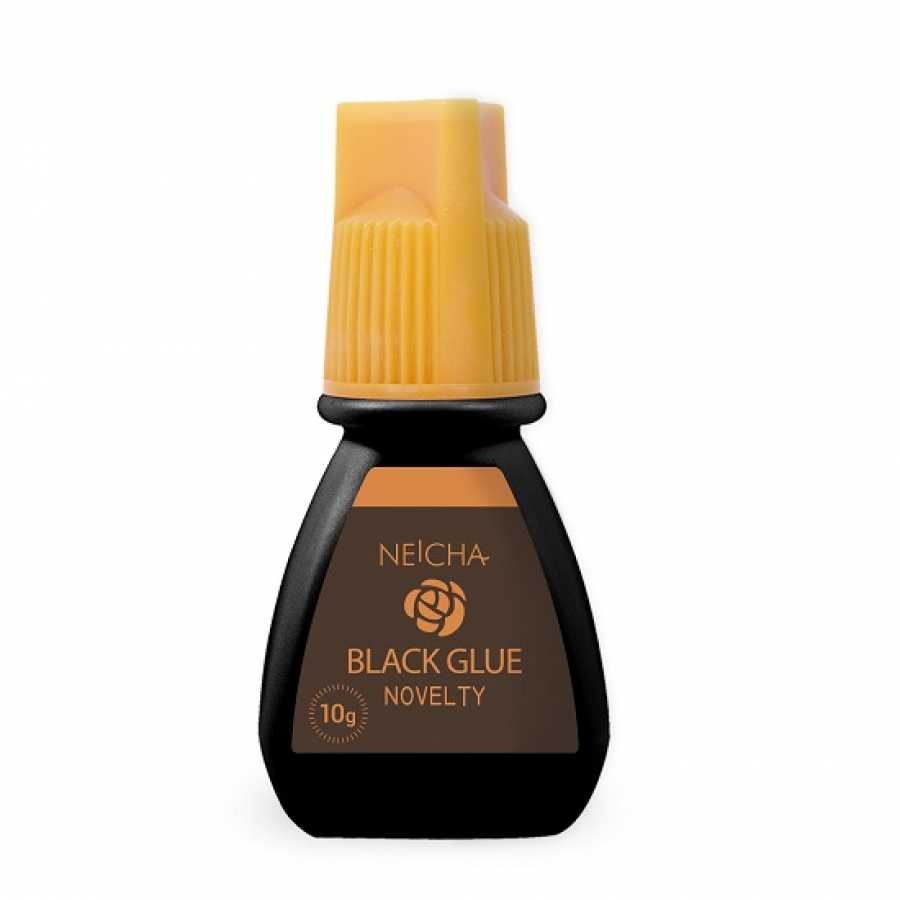
Lash adhesives are based on cyanoacrylates, the same chemical family as “super glue”. A scientific review in the journal Molecules (Duffy, Zetterlund and Aldabbagh, 2018) explains that these monomers polymerise very quickly on contact with the thin film of moisture found on almost any surface: water and other weak bases start the reaction, and the chain grows until it forms a solid plastic. As Lash Bee Pro explains, the adhesive in the bottle contains a small amount of acidic stabiliser that keeps it liquid; once applied, moisture in the air starts the cure.
In practice, that means two things:
- Lash glue doesn’t “dry” by evaporation; it cures by reaction. More humidity = faster cure; less humidity = slower cure.
- Too much humidity is a problem too. Above roughly 70% relative humidity (the figure varies by adhesive), you risk “shock curing”: the glue hardens all at once, the bond is brittle and a whitish residue (“blooming”) may appear.
Temperature matters as well. Lash Bee Pro notes that for most cyanoacrylates, a rise of around 8–10°C roughly halves the curing time, while cold makes the adhesive thicker and the bond more brittle.
Recommended humidity and temperature for eyelash extension glue
There is no single standard: each manufacturer publishes its own ranges, and they don’t always agree. Here is what the sources we checked say:
| Source | Relative humidity | Temperature |
|---|---|---|
| Lashbase (Advance range) | Works at 15–85%; optimal 40–70% | Works at 15–35°C; optimal 19–24°C |
| Lash Affair (adhesive guide) | 40–70%; sweet spot 50–60% | 18–26°C; sweet spot 20–24°C |
| Lovely (technical blog) | Ideal 45–60% | No figure in that article |
| Lash Bee Pro (technical blog) | Generally 40–60%; shock-cure risk above ~70% | 20–24°C |
In short, most sources land on 40% to 60–70% humidity and roughly 20–24°C. But the figure that counts is always the one on the data sheet or leaflet for your adhesive, because fast and slow glues are designed for different conditions.
A real example: how setting time shifts with humidity
Lashbase publishes a table for its Advance adhesive (sold as a 1–2 second glue) that shows the effect of humidity clearly. These figures apply to that product only and can’t be transferred to other glues:
| Relative humidity | Setting time | Manufacturer’s note |
|---|---|---|
| Below 15% | 4–5 s | Weaker bond |
| 15–25% | 3–4 s | — |
| 25–40% | 2–3 s | — |
| 40–70% | 1–2 s | Optimal range |
| Above 70% | 0.5–1 s | Weaker bond |
Choosing a glue for your conditions
The drying time printed on a glue (1 s, 2 s…) is a reference point. As Lovely explains, in a humid room a slow glue can set much faster than stated. So:
- High humidity (above your adhesive’s range): a slower glue, or one designed for high humidity, usually behaves better, and you can bring humidity down with air conditioning or a dehumidifier.
- Dry room: a faster or low-humidity glue, or raise humidity with a humidifier. Lovely suggests switching it on about 30 minutes before the appointment.
- Your skill level: London Lash suggests choosing an adhesive based on your experience, room temperature, humidity and viscosity. If you’re still building speed with isolation, an ultra-fast glue can work against you.
You’ll find the options we stock in our glue and liquids category. Always compare the manufacturer’s data sheet with what your hygrometer reads.
The Canary Islands climate: what AEMET data shows
The climate normals published by AEMET, Spain’s state meteorological agency (1981–2010), give an idea of average outdoor humidity at several stations across the islands:
| AEMET station | Mean annual relative humidity | Monthly mean range | Mean annual temperature |
|---|---|---|---|
| Santa Cruz de Tenerife | 63% | 58–66% | 21.5°C |
| Tenerife North (airport, La Laguna) | 73% | 69–79% | 16.8°C |
| Tenerife South (airport) | 66% | 62–68% | 21.4°C |
| Gran Canaria (airport) | 66% | 64–69% | 21.1°C |
These are outdoor averages; indoors, the reading changes with air conditioning or a dehumidifier. Even so, they show that in many parts of the islands outdoor humidity sits at the upper end of the recommended ranges, and at Tenerife North it goes beyond them. Measure rather than guess.
Use a hygrometer (and actually check it)
A hygrometer is a small device that measures relative humidity and usually temperature too. Lovely recommends keeping one in your work area at all times. A few practical tips:
- Place it near the bed, at working height, not next to a window or under the air-con vent.
- Check it before every appointment, not just first thing: humidity and temperature shift during the day.
- Compare the reading with your glue’s range and adjust: air conditioning or a dehumidifier if it’s too humid, a humidifier if it’s too dry.
Our accessories range includes a compact digital LCD thermometer-hygrometer designed for the workstation.
How to store lash glue before and after opening
Unopened bottles
- London Lash says sealed glue can be kept in the fridge, in an airtight container with silica gel sachets.
- Take it out well before opening so it reaches room temperature (London Lash says at least an hour). Opening a cold bottle lets moisture condense inside.
- Unopened shelf life depends on the manufacturer: London Lash gives 6 months from the production date; Lashbase gives 12 months for its Advance range. Always check the date on the pack.
Opened bottles
- Don’t put it in the fridge. London Lash and Lash Affair agree: taking it in and out causes condensation, and the glue can start to polymerise inside the bottle.
- Store it upright, tightly closed, somewhere cool, dry and dark, away from sunlight, windows and heat sources. An airtight container with silica gel helps.
- Wipe the nozzle after each use and screw the cap on firmly. A loose cap or dirty nozzle encourages that white crust on the tip.
- Write the opening date on the bottle. Sources give different timeframes once opened: 4–6 weeks (London Lash, Lash Affair), 6–8 weeks (Lash Bee Pro) or up to 3 months (Lashbase, for its Advance range). Follow your manufacturer’s guidance.
Shaking the glue and changing the drop
The components of the adhesive (cyanoacrylate, thickeners and, in black glues, pigment) separate when the bottle sits still. If you don’t shake it, the drop may not have the right composition, and both setting time and bond strength change.
- How long to shake: London Lash recommends about a minute before first use and around 30 seconds before each new drop, shaking side to side so adhesive doesn’t get stuck in the nozzle. Lash Affair suggests 60–90 seconds with the cap tightly closed. If you use an electric glue shaker (you’ll find one in our accessories), follow your adhesive’s instructions.
- How often to change the drop: there’s no universal figure. Lash Affair advises every 15–20 minutes, or every 10–15 in high humidity; Lash Bee Pro says about every 10 minutes in humid conditions; Lashbase says a drop of its Advance adhesive can last up to 60 minutes in optimal conditions. All agree on one thing: if the drop goes stringy, skins over or thickens, replace it straight away.
- Where to place it: a clean surface such as a jade stone or a glue ring. Lashbase warns against leaving the drop out too long or stretching a stringy drop to make it last.
Nebuliser or nano mister: when and how to use one
Because cyanoacrylate cures with moisture, a nano mister releases a very fine cloud of water to speed up curing once you’ve finished. Instructions vary by device; Lash Affair, for example, recommends:
- Using it at the end of the full set or infill, before removing the eye pads.
- Holding it about 20–25 cm (8–10 inches) from the lashes.
- Misting each eye for 3–5 seconds with a light pass, waiting 20–30 seconds and repeating once.
- Using distilled water only: minerals in tap water can clog the nozzle and leave residue.
The key is not to soak the lashes: Lash Bee Pro warns that forcing the cure with water, alcohol or bicarbonate of soda can cause shock curing and irritate the eye, and names the nano mister as the exception. And don’t promise clients they can get their lashes wet straight away: follow the aftercare your glue manufacturer specifies. During application, a mini fan is still useful for keeping fumes away from the eye.
Common glue mistakes
- Working by feel with no hygrometer, then blaming the glue when the weather changes.
- Keeping an opened bottle in the fridge, or leaving it on a sunny windowsill.
- Opening a bottle straight from the fridge without letting it warm up.
- Not shaking before each new drop.
- Stretching the same drop once it’s gone stringy.
- Wetting lashes with water or unsuitable products to “speed up” drying.
Safety: fumes, allergies and patch testing
Dermatology literature reports reactions such as allergic contact dermatitis and allergic blepharitis in clients, and occupational dermatitis, rhinitis and asthma in lash technicians, particularly with cyanoacrylate-based glues. So ventilate your room well and never let adhesive touch the skin or eye. Many professionals do a patch test with a few extensions 24–48 hours before the first appointment; London Lash points out that a clear patch test doesn’t guarantee a sensitivity won’t develop later. If a client has intense itching, swelling, pain or redness, remove the extensions and advise her to see a healthcare professional.
Lash Canarias supplies mentioned in this guide
- Digital Hygrometer Thermometer and Humidity
- Eyelash Glue Shaker Electric
- Ring Cup for Glue White 10 Units
- Mini Fan Portable
FAQs
What is the ideal humidity for eyelash extension glue?
It depends on the adhesive. Most manufacturers we checked put the optimal range between 40% and 60–70% relative humidity, at around 20–24°C. Always check your glue’s data sheet.
Can I keep lash glue in the fridge?
Only if it’s unopened and the manufacturer allows it, inside an airtight container with silica gel, and letting it come to room temperature before opening. Once opened, the sources we checked advise against the fridge because of condensation.
How often should I change my glue drop?
Recommendations range from every 10–20 minutes (more often in high humidity) up to 60 minutes in optimal conditions for one specific adhesive. As soon as the drop goes stringy or thick, replace it.
Why is my glue drying too fast?
Usually because humidity or temperature is above the adhesive’s range. Measure, bring the humidity down or switch to a slower glue.
How long does lash glue last once opened?
Sources vary from 4 weeks to 3 months depending on the manufacturer. Write the opening date on the bottle and watch for the signs London Lash describes: thick or stringy texture, a grey or separated look after shaking, white residue on the nozzle and poorer retention.
Sources
- Duffy, Zetterlund and Aldabbagh (2018). Radical Polymerization of Alkyl 2-Cyanoacrylates. Molecules
- Lashbase: Information about your lash adhesive (Advance specifications)
- Lash Affair: Lash Extension Adhesive FAQ
- Lash Bee Pro: Cyanoacrylates in lash extension adhesives
- Lovely: How Humidity Wrecks Your Lash Extensions (and How to Fix It)
- London Lash: Eyelash extension glue and humidity
- London Lash: How to store eyelash glue
- London Lash: Shaking your lash glue, is it necessary?
- Lash Affair: LA Nano Mister
- Lashbase: Retention issues, the reasons and solutions
- AEMET: Climate normals, Santa Cruz de Tenerife
- AEMET: Climate normals, Tenerife North Airport
- AEMET: Climate normals, Tenerife South Airport
- AEMET: Climate normals, Gran Canaria Airport
- Wesley and Talakoub. Aesthetic Dermatology: Eyelash extensions (The Hospitalist)
- London Lash: Lash Extensions Patch Test Guide