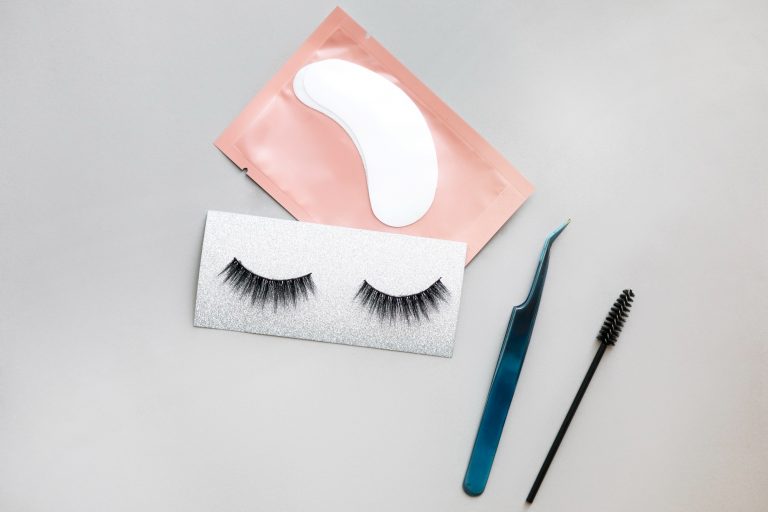

You work millimetres from the eye, with sharp tweezers and an adhesive that bonds to skin in seconds. That’s why eyelash extension hygiene isn’t optional: it protects your client, it protects you, and it’s what builds trust in a studio. This guide covers patch testing, how to tell irritation from allergy, cyanoacrylate fumes, protecting the client during the treatment, cleaning and disinfecting tweezers, and what EU law says, with sources listed at the end.
Before you start: client record and patch test
EyeWiki, the American Academy of Ophthalmology’s (AAO) clinical encyclopaedia, says people with eye disease or a history of allergy should avoid extensions, and that skin patch tests or in-salon allergy questionnaires can be used to screen for allergy. A useful consultation form records:
- Known allergies (acrylates, adhesives, acrylic or gel nails) and any previous reactions.
- Current eye problems: conjunctivitis, blepharitis, dry eye, recent or planned surgery.
- The adhesive used and its batch number, so it can be traced if there’s a reaction.
On patch testing, the AAO advises clients to ask for the adhesive’s ingredient list, check it hasn’t expired and request a spot test on the inside of the wrist before it goes anywhere near the eyes. There’s no single official protocol for lash artists, so follow your adhesive manufacturer’s instructions and record the date and result.
An important caveat: a negative test isn’t a lifetime guarantee. A 2021 review in Advances in Dermatology and Allergology explains that acrylate sensitisation can develop after months or years of exposure, and describes a client who developed blepharoconjunctivitis and later rhinitis after around two years of extensions. Ask at every infill whether she’s noticed anything new.
Irritation, allergy or burn: reading the signs
Diagnosis isn’t your job, but recognising the signs is. Here’s what the clinical sources describe:
| Irritation from fumes | Allergic reaction | Thermal burn | |
|---|---|---|---|
| Cause | Adhesive vapour reaches the surface of the eye | Sensitisation to adhesive components (acrylates) or to pads and tapes | Cyanoacrylate gives off heat as it polymerises |
| When it appears | During the treatment or in the hours afterwards (EyeWiki) | Can appear hours or days later (EyeWiki) | Happens during application; pain may be felt over the following hours |
| Typical signs | Red, watery, stinging, itchy eyes | Swollen, red, itchy eyelids; contact dermatitis is nearly always itchy | Pain, redness, small areas of damaged skin on the eyelid |
On burns, a case report in The PMFA Journal (2020) explains that cyanoacrylate’s setting reaction can reach around 68°C (a figure the authors take from a case series involving nail glue). The risk rises with large amounts of adhesive, low-viscosity adhesives and the presence of cotton, which speeds up the reaction. The practical takeaway: small drops, and no cotton near the adhesive.
If there’s pain, swelling or intense itching, don’t try to treat it yourself. The AAO advises clients not to remove extensions themselves and to see an ophthalmologist promptly. Refer her to a healthcare professional and note what happened, the adhesive and the batch on her record.
Cyanoacrylate and fumes: ventilation and protecting yourself
The main ingredient in lash adhesives is ethyl cyanoacrylate. Safety data sheets (SDS) classify it under the CLP Regulation as a skin irritant (H315), a serious eye irritant (H319) and as possibly causing respiratory irritation (H335).
In 2013, Finnish researchers reported in Occupational Medicine two beauty professionals with occupational rhinitis (one also with asthma) caused by lash extension adhesives. During the challenge test they measured ethyl cyanoacrylate in the air at 0.4 mg/m³ and concluded that even small amounts of adhesive can cause occupational asthma and rhinitis. The 2021 review mentioned above also reports hand eczema in lash stylists.
Measures found in SDS documents and the scientific literature:
- Ventilation: the SDS we consulted calls for adequate ventilation and, in confined spaces, extraction at the point where vapour is released. Make sure airflow doesn’t push fumes towards your face or your client’s.
- Gloves: the 2021 review rates nitrile as more effective than latex, but only for brief exposure, and suggests changing gloves after roughly 30 minutes if the work isn’t finished.
- Exposure limits: the SDS we consulted lists a value of 0.2 ppm (time-weighted average) for ethyl cyanoacrylate in Spain. Check your national occupational exposure limits and your own adhesive’s SDS.
- Storage: keep the container tightly closed in a cool, dry place. Moisture, water and alcohols are listed as incompatible materials in the SDS, so don’t store it next to open bottles of alcohol.
If you notice breathing symptoms that get worse on working days, talk to your doctor or occupational health service.
Protecting the client during the treatment
- Eyes closed throughout: the AAO notes that the treatment can take up to two hours and that the eyes should stay closed the whole time.
- Pads and tape placed carefully: EyeWiki notes that eyelid tapes can cause conjunctival erosion through mechanical irritation, and a 2019 review warns that some gel pads contain methylisothiazolinone, which can cause irritation or allergy. Position under-eye pads or foam tape (both in our accessories range) so they don’t touch the waterline, and ask the client whether anything stings.
- Use little adhesive: a small drop reduces the burn risk described above.
- If adhesive touches the eye or bonds the lids: the SDS says not to force the eyes open, to apply a pad soaked in warm water and, if it gets in the eye, to rinse carefully with water for several minutes. If irritation or bonding persists, seek medical help.
Eyelash extension hygiene: tweezers, surfaces and hands
In Spain there’s no national rule written specifically for lash studios: hygiene requirements are set by regional governments and local councils. As an example, the technical sheet from Las Rozas council (Madrid), based on its 2003 by-law, requires among other things:
- All tools that touch clients’ skin to undergo hygiene measures that make them safe.
- Non-disposable items that need to be sterile to be cleaned, packaged, sterilised (autoclave or another effective device) and stored properly.
- Towels and linen changed for every client, washable surfaces and furniture, and handwashing at least before and after every treatment.
Check the rules that apply where you work, whether that’s your local council or your national licensing body.
Cleaning isn’t the same as disinfecting
The US Centers for Disease Control and Prevention (CDC) group equipment by risk (the Spaulding classification). Items that only touch intact skin are “non-critical” and low-level disinfectants are enough; items that touch mucous membranes or broken skin are “semi-critical” and need at least high-level disinfection. Either way, thorough cleaning must always come first, because leftover debris stops the disinfectant from working.
On alcohol, the CDC says its optimum bactericidal concentration is 60–90%, that it doesn’t sterilise (it doesn’t kill spores), penetrates protein-rich residue poorly and evaporates quickly, which makes it hard to keep the surface wet for long enough.
Tweezer protocol between clients
- Remove adhesive residue with the product your tweezer manufacturer recommends.
- Wash with water and detergent, scrubbing the grip area too.
- Rinse and dry.
- Disinfect with an approved product, observing the contact time on its label. If your local rules or your own protocol require sterilisation, use an autoclave and check the manufacturer allows it.
- Store them in a clean, closed container until next use. Having several sets of tweezers lets you rotate them without rushing.
Apply the same logic (clean, then disinfect) to the couch, trolley, lash palette and lamp, and cover the couch with clean linen for every client.
Disposables: what to use only once
Anything that touches the eyelid and can’t be cleaned thoroughly should be single-use: micro brushes, disposable spoolies, pads, tape and the surface you put your adhesive drop on. Never dip a used brush back into a product. You’ll find this kind of kit in our accessories category.
EU rules: cosmetics, CLP and cyanoacrylate labelling
Is lash adhesive a cosmetic?
Regulation (EC) No 1223/2009 defines a cosmetic product as any substance or mixture intended to be placed in contact with the external parts of the human body (including the hair system) with the exclusive or main purpose of cleaning them, perfuming them, changing their appearance, protecting them, keeping them in good condition or correcting body odours. Lash shampoos, primers and removers usually fall within that definition.
Adhesive isn’t so clear-cut. The European Commission’s Borderline Manual (section 358, not legally binding) says it’s assessed case by case: if the glue’s only job is to attach an article to the body, it isn’t a cosmetic and must meet general product safety law instead, which is now Regulation (EU) 2023/988, applicable since 13 December 2024. National authorities have the final say.
Mandatory cyanoacrylate labelling (CLP)
Cosmetic or not, Annex II, point 2.2 of the CLP Regulation (EC) No 1272/2008 requires the immediate packaging of cyanoacrylate-based adhesives to carry this statement, accompanied by appropriate safety advice:
EUH202: “Cyanoacrylate. Danger. Bonds skin and eyes in seconds. Keep out of the reach of children.”
If an adhesive doesn’t carry that warning, be wary. For products that are cosmetics, Article 19 of Regulation 1223/2009 requires the label to show, among other things, the responsible person and their address, the contents, the date of minimum durability or period after opening, precautions for use, the batch number, the product’s function and the ingredients. Buy your adhesives from suppliers who can give you the SDS and technical data sheet.
Reporting a reaction: cosmetovigilance
In Spain, the medicines agency AEMPS says members of the public and professionals who use or apply cosmetics can report undesirable effects through its NotificaCS portal. If a client reacts to a cosmetic (a remover, shampoo or primer), note the product and batch and report it to the competent authority in your country.
Quick checklist for your studio
| When | What to check |
|---|---|
| Before | Consultation form and allergy questions, patch test as per manufacturer, adhesive in date and carrying CLP labelling |
| During | Hands washed, nitrile gloves changed in time, eyes closed, pads clear of the waterline, small drop, no cotton, good ventilation |
| After | Tweezers cleaned and disinfected, surfaces cleaned, disposables binned, linen changed, aftercare given |
| If there’s a reaction | Refer to a healthcare professional, record product and batch, report it if it’s a cosmetic |
Lash Canarias supplies mentioned in this guide
Frequently asked questions
Is a patch test compulsory before lash extensions?
We haven’t found a Spanish national rule requiring one. The AAO recommends a wrist test and EyeWiki mentions skin patch tests or questionnaires. Follow the manufacturer’s instructions and keep a written record.
If the patch test is negative, can the client still become allergic?
Yes. Acrylate sensitisation can develop after months or years of exposure, according to a 2021 dermatology review. Ask about symptoms at every visit.
Is wiping tweezers with alcohol enough?
No. Clean them first: according to the CDC, debris stops disinfectants working. Then disinfect, observing the contact time, or sterilise if your local rules require it.
Can adhesive fumes affect me as the lash artist?
Yes. Occupational rhinitis and asthma caused by cyanoacrylate lash adhesives have been reported in lash professionals. Ventilate well and extract fumes at source if you can.
What warning must a cyanoacrylate adhesive carry?
Under EU CLP rules, the immediate packaging must show the EUH202 statement, accompanied by safety advice (see the full wording above).
Sources
- American Academy of Ophthalmology – Eyelash Extension Facts and Safety
- EyeWiki (AAO) – Eyelash Extensions
- Masud et al. (2019) – Eyelid Cosmetic Enhancements and Their Associated Ocular Adverse Effects
- Kucharczyk et al. (2021) – Acrylates as a significant cause of allergic contact dermatitis: new sources of exposure. Adv Dermatol Allergol
- Lindström et al. (2013) – Occupational asthma and rhinitis caused by cyanoacrylate-based eyelash extension glues. Occup Med
- Nardeosingh and Tung (2020) – Thermal injury and false eyelashes. The PMFA Journal
- Safety data sheet for an ethyl 2-cyanoacrylate adhesive (Afinitica AF02, Spanish edition)
- CLP Regulation (EC) No 1272/2008, Annex II, 2.2 – Mixtures containing cyanoacrylates
- Regulation (EC) No 1223/2009 on cosmetic products (BOE, Spanish text)
- COSlaw – New entries in the Borderline Manual of cosmetic products: glues and adhesives
- EU-OSHA – Regulation (EU) 2023/988 on general product safety
- AEMPS – Cosmetovigilancia
- CDC – A Rational Approach to Disinfection and Sterilization (Spaulding classification)
- CDC – Chemical Disinfectants
- Las Rozas council – Technical sheet on hygiene conditions for hairdressers, beauty institutes and beauty services (Spanish)